
Guides
Onimusha Combat Guide: How to Land Every Issen and Survive Way of the Sword
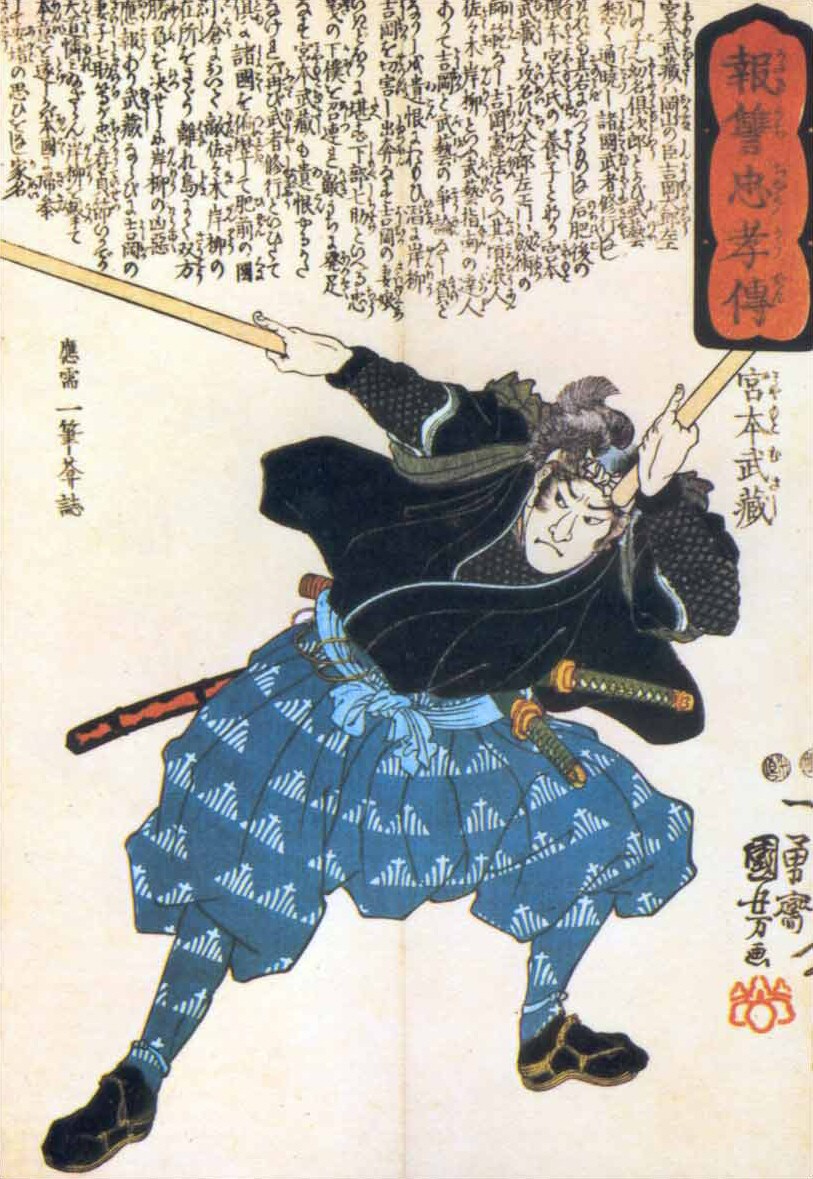
Source: Woodblock print of Miyamoto Musashi with two bokken — original artwork public domain, via Wikimedia Commons
Onimusha: Way of the Sword is not a soulslike, and that's the first thing to internalize. Capcom's samurai comeback launched September 4, moved over a million copies on day one, and sits at 85 on PS5, 83 on PC and Xbox, and a remarkable 89 on Switch 2 — with 91% positive Steam reviews across nearly 30,000 players. This is a reactive, arena-based action game where the Issen counter is the whole power fantasy. This Onimusha combat guide breaks down how the system actually works.
Onimusha Combat Guide: the Basics
Forget stamina-draining dodge rolls and bonfire loops. Way of the Sword runs on fixed arenas and fixed level structure across roughly 20 hours: you enter, demons spawn, you carve them up, you move on. Miyamoto Musashi's katana has two stances — one-handed for speed, two-handed for power — and switching between them mid-combo is the basic skill the whole game assumes. Learn the swap early and every fight gets easier.
The system rewards aggression with precision. Holding block drains stamina and gets you killed, turtling gets you killed, and mashing gets you killed. What works is reading the enemy's wind-up and answering with the right tool. Once that clicks, the combat feels incredible.
Issen: the One-Button Win Condition
The Issen is the heart of this Onimusha combat guide. Press attack the split-second before an enemy strike connects and Musashi answers with an instant-kill counter. The timing window is generous enough to learn and tight enough to feel earned. Practice on slow enemies first — the lumbering early-game demons telegraph their swings for days, which makes them perfect training dummies.
Chain it with the Issen Break, which lets you carry the counter into surrounding enemies. A single well-timed Issen in a crowded arena can clear half the room. When you're comfortable, start hunting Issens deliberately instead of trading hits — the damage difference is absurd.
Parry, Deflect, Dodge: Know the Difference
Three defensive answers, three use cases. Parry the attacks whose timing you know — bosses with clean wind-ups are parry bait. Dodge the moves you haven't learned yet, because an unfamiliar animation is a gamble you don't need to take. And never hold block as a lifestyle choice: it drains stamina and leaves you standing still in a game that punishes passivity. Deflect sits between the two for multi-hit strings where a full dodge would waste your opening.
The four-tier parry system rewards clean timing over panic inputs. If your parries feel inconsistent, you're probably pressing early — the window favors the patient.
Souls, Gauges, and What to Farm First
Souls are the economy, and the rules are simple once you see them. Hold L2 to absorb souls after kills: red and white souls feed the Oni gauge and your upgrades, yellow souls heal you. Drop rates for yellow souls rise when your HP is low, so the game quietly helps you when you're struggling — don't be proud, scoop them up.
Two gauges matter most. The Blaze and Reflex gauges power your special pressure tools, and the Oni Armament meter is your boss-killer reserve. Bank Oni Armament for the Sasaki Ganryu fight at the end of the Kiyomizu route — that fight is where most players burn out, and a full meter turns it into a statement win.
Elemental Swords: Pick the Right Tool
Your blade choice is a loadout decision, not a cosmetic one:
- Thunder Blade: highest single-target boss DPS. This is your boss sword.
- Wind Katana: crowd control. Take it into packed arenas and let the sweeps do the work.
- Fire Broadsword: breaks the armored enemies' super armor in Act 4. Non-negotiable there.
Match the sword to the encounter instead of maining one. Players who refuse to swap hit a wall in Act 4 every time.
Before the Point of No Return
The game has a hard point of no return: 'The Clash at Rendaino.' Before you cross it, run this checklist:
- Manual save, then spend your red souls — don't walk in with a fortune unspent.
- Finish side content and farm any missing upgrades.
- Stock Charms, Oni Armaments, and the Hozuki Pouch.
- Upgrade the Medicinal Pouch early in your playthrough, not now — if you skipped it, fix that first.
- Use Oni Vision in every new area so nothing important stays hidden.
- Bring the bow for bosses. Ranged chip damage between Issen windows adds up fast.
Way of the Sword respects players who engage with its systems instead of fighting them. Master the Issen, respect the stances, and Musashi's 20 hours will be the best action campaign of the year. For more beginner breakdowns, see our Where Winds Meet Qingzhou guide, the Valor Mortis beginner guide if you want a real soulslike, and our DayZ Badlands survival guide.