
Guides
Mycopunk Beginner Guide: Classes, Builds, and 11 Tips for the October 20 Launch
Source: Pigeons at Play / Devolver Digital (via Steam)
Mycopunk Beginner Guide: What to Know Before October 20
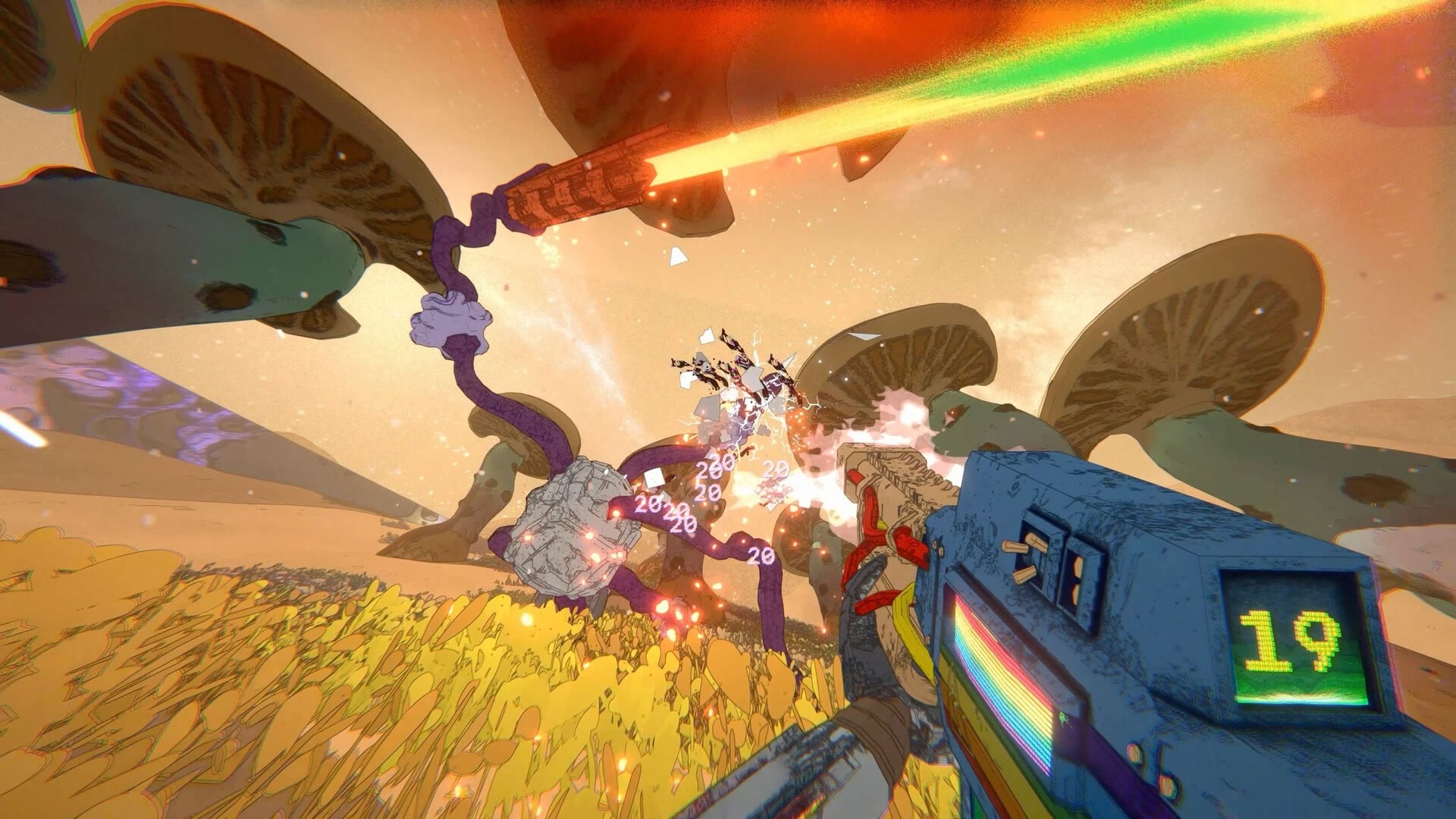
Mycopunk leaves Early Access on October 20, and if you are a PS Plus Extra or Premium subscriber, it lands in your Game Catalog on day one. Pigeons at Play's fungal co-op shooter spent over a year in Steam Early Access, where it holds an 88% positive rating, and the PS5 launch is its console debut. This mycopunk beginner guide covers the four classes, the hive-grid build system, and the habits that separate a surviving crew from a squad that wipes in the first ten minutes.
The pitch is simple: you are the New Atlas Hazard Crew, a squad of robot outcasts working for the SAXON Corporation, cleaning up a planet-wide fungal disaster. The comparisons to Deep Rock Galactic and Helldivers 2 are fair, but Mycopunk has its own mechanical identity, and the stuff that matters most is not obvious from the trailers.
Mycopunk Beginner Guide: Picking Your Class
There are four classes, and any weapon can be used by any class, so pick based on movement and team role:
- Wrangler — the safest starter pick. A robotic cowboy with a lasso that pulls enemies into range, a rocket whip, and a mid-air dash. The lasso pairs brutally well with shotguns like the Jackrabbit. Upgrades like Lasso Mastery extend your reach, and Rodeo Clown lets the lasso grab multiple enemies at once.
- Glider — the most mobile class, using a wingsuit for vertical control plus rockets that damage enemies and heal allies. Fragile, but unmatched for objectives that demand speed. If you learn positioning, this class carries games.
- Scrapper — jetpack, grapple pole, explosives and traps. The area-denial specialist, strongest when teammates handle aggro so you can set up high-damage zones behind the frontline.
- Bruiser — the tank. Hard-Light Shield, a Nose Dive slam, and the durability to stand in the middle of a swarm. Upgrades like Domed turn the shield into a dome that grants overhealth to allies, making the Bruiser a support tank late-game.
New players should start with the Wrangler. It is forgiving, self-sufficient, and teaches the movement rhythm the game demands. A classic team comp pairs a Bruiser controlling enemy flow with a Scrapper setting traps behind them, plus a Glider running objectives.
The Hive-Grid: Builds Are a Puzzle
The hive-grid is Mycopunk's signature system: a hexagonal upgrade grid where you slot modular nodes onto weapons and abilities. Upgrades change how gear behaves — explosive or bouncing bullets, fire and shock status, healing from damage dealt, even ammo behavior. It is closer to a puzzle than a skill tree, and experimenting is the point.
The key rule: you cannot run one build everywhere. Cleanup missions with dense waves reward crowd control. Escort objectives demand survivability and steady ammo flow. Boss fights want raw damage and durability. Build two or three loadouts and rotate by mission type instead of hunting for one perfect setup.
Ammo Works Backwards — Use It
Here is the mechanic most beginners miss: there are no ammo pickups. Instead, dealing damage with one gun recharges the other's ammo. You are meant to swap weapons constantly. Treat your loadout as two active guns, not a main and a backup, and you will stop running dry in the middle of fights.
Survive Your First Missions
Keep moving. Enemies do not stop chasing, and standing still gets you swarmed. Sprint, slide, dash, wingsuit — whatever your class offers, use it. You can shoot while sprinting, so there is never a reason to plant your feet.
Use abilities constantly. Cooldowns are short and the skills are designed to be spammed. Bruiser's shield slam, Glider's rocket salvo, Scrapper's jetpack — waiting for the perfect moment just wastes free damage and control.
Save health orbs. Green orbs heal for a fixed amount that does not scale. Do not vacuum them up the moment they drop; leave them on the ground and collect them when you are actually hurt.
Scout planets before launching. Hovering over a mission region shows which rare resources it holds — Beezia, Gussula, Saxonite. If you need a specific material, check the region instead of running random missions and hoping.
Fix the UI. Head into graphics settings and lower UI Distortion and UI Bloom. The default settings make menus harder to read and can trigger motion sickness; toning them down costs nothing.
Think twice about solo. Mycopunk is built for four-player co-op. You can set a private lobby through the Socials menu, but there is no enemy scaling, no AI companions, and getting downed is instant death. If you go solo, take the Bruiser or Glider, drop the difficulty, and expect a much harder game.
The Hub, Progression, and What 1.0 Adds
Between missions you return to the SAXON base hub, where you rebuild your hive-grid, spend loot, talk to NPCs, and take on weekly challenge missions with modifiers like toxic fog or endless waves. It is the progression backbone that gives the game its replay value.
The 1.0 launch adds new guns, grenades, maps, modes, a new character, and hats — hats were conspicuously missing, and the community noticed. For PlayStation players, this is the first time the game is available at all, and for Extra and Premium members it costs nothing extra to try. If co-op shooters are your thing, October 20 is worth marking — and this month's PS Plus catalog is already one of the strongest of the year. Need a second shooter to rotate with? Our Valor Mortis beginner guide covers another October release.